















St Lucia citizenship by investment allows eligible applicants to seek citizenship through a qualifying investment and an application subject to government checks. For people considering the St Lucia citizenship by investment real estate route, the key questions are whether the project is approved, what the total costs include, and how holding and resale conditions work. Lifestyle appeal matters, but it should be considered alongside the programme rules and investment risks.
Mechanics matter, but they’re only half the story. What decides whether the choice still feels right in ten years sits outside the application form: the politics, the language, the economy and the rhythm of daily life.
What Saint Lucia Offers Beyond Citizenship
Start with scale. Castries is the capital, and the country has about 180 thousand residents as of 2024. That’s a small community by any measure. English is the official language. That sounds minor until you’re reading a purchase contract, enrolling a child at school or booking a specialist, and none of it needs translating.
Then there’s the setting. Saint Lucia is known for stunning natural landscapes, and Rodney Bay and Marigot Bay are among the best-known places to look at property. Culture adds real richness to everyday life, which is worth experiencing in person before you decide.
Daily life has trade-offs, too. It’s an island, so imported goods tend to cost more and some services move at a slower pace than people used to big cities expect. That’s part of island life. If you thrive on predictability and next-day delivery, admit it to yourself before you buy anything.
You can test a lot of this from home. Read the local news for a few weeks, follow property listings in Rodney Bay and Marigot Bay, and ask people who own there what a typical month costs. Patterns show up quickly, and so do the questions you hadn’t thought to ask.
Anyone weighing St Lucia citizenship by investment should ask which of these qualities they’d still enjoy once the vacation novelty wears off.
Investors usually boil the appeal down to four things:
- A stable political environment, which matters because a passport ties you to one country’s institutions for decades.
- Tax advantages worth testing against your own situation, since what you save depends on where you live and earn.
- An English-speaking environment, a practical gain when you deal with lawyers, banks and schools.
- Cultural richness, for people who want a place with real character rather than a generic resort.
St Lucia Citizenship by Investment: Approved Real Estate
The St Lucia citizenship by investment program dates to 2015. The real estate route asks investors to buy into qualifying resorts, villas or condominiums, which makes the choice of property part of the choice of lifestyle.
Before committing, confirm the current minimum holding period and resale conditions with the programme authority and an authorised agent. Do not assume that a qualifying investment is a home you can occupy freely: ownership rights, personal use and distributions depend on the project documents. Rental income, dividends, capital appreciation and a buyer at the end of the holding period are not guaranteed.
It suits people who will genuinely use the island: families planning winters by the water, entrepreneurs who want a base in an English-speaking jurisdiction, or investors comfortable holding Caribbean property for rental income. Someone who only wants a spare passport can still apply, but they’ll get less from the place. Property in a program is a long-term asset, and the happiest owners treat it as somewhere they return to every year, not a line in a portfolio.
The housing market is broader than the word “resort” suggests. Listings range across family homes, luxury villas, condos, bungalows and historic colonial estates, with Rodney Bay, Marigot Bay and Castries among the popular locations, particularly in the northwest of the island. Only sanctioned projects count toward the program, so the open market is wider than the qualifying list.
Each property type serves a different kind of owner. Condos suit buyers who want flexibility, since a condo can serve as a personal base, a vacation rental or a long-term rental. Luxury villas with ocean views and premium amenities fit investors chasing rental income and possible appreciation. Bungalows and family homes suit people who want space and a quieter, more residential feel than a resort offers. Historic colonial estates attract those who value character and accept the upkeep that older buildings demand.
Property Income, Tourism Demand and Investment Risks
Marketing around citizenship by investment St Lucia often leans on rental income, and that deserves a closer look. Strong tourism makes vacation rentals, such as beachfront condos or villas, an attractive way to earn from a property when you’re not there. The flip side is that the same visitors drive your returns.
Tourism-driven means demand follows the seasons. High season fills calendars, while the months around hurricane season are quieter, and storms are a real consideration anywhere in the Caribbean. Insurance, building standards and a property manager who actually answers the phone matter more than the view from the terrace.
It also means a slump in travel can ripple through the local economy quickly. Location matters, too. Much of the investor interest sits in the northwest, so expect plenty of similar rentals competing for the same guests.
Before you commit, put these points to yourself:
- Count the weeks you’ll really spend on the island, because that number shows whether a private villa or a rental-friendly condo fits better.
- Decide how much rental income you’re counting on. Treat projected returns as estimates, because bookings follow the tourist calendar.
- Visit outside peak season at least once. You’ll see the quiet months and the weather as locals live with them.
- Ask how a property manager and an insurer handle storm season, since those arrangements protect the asset while you’re away.
St Lucia Citizenship by Investment: Common Questions
Does buying any property qualify for citizenship?
No. The real estate route requires an approved project that meets the programme conditions. A home advertised on the ordinary property market should not be assumed to qualify.
Is approval automatic after investing?
No. Applications are assessed by the programme authority and are subject to due diligence. The board can grant, deny or delay an application for cause.
What should applicants verify before paying?
Check the approved investment, agent authorisation, current qualifying amount, additional fees and project terms. Review the official Saint Lucia Citizenship by Investment programme and approved real estate requirements. Fees and rules can change, so request a current itemised quote.
Independent legal and tax advice can help assess how citizenship, tax residence and property ownership affect your circumstances. These are separate questions; citizenship alone should not be treated as a promise of tax savings.
For further reading, explore GulfInside’s real estate coverage and business guides.
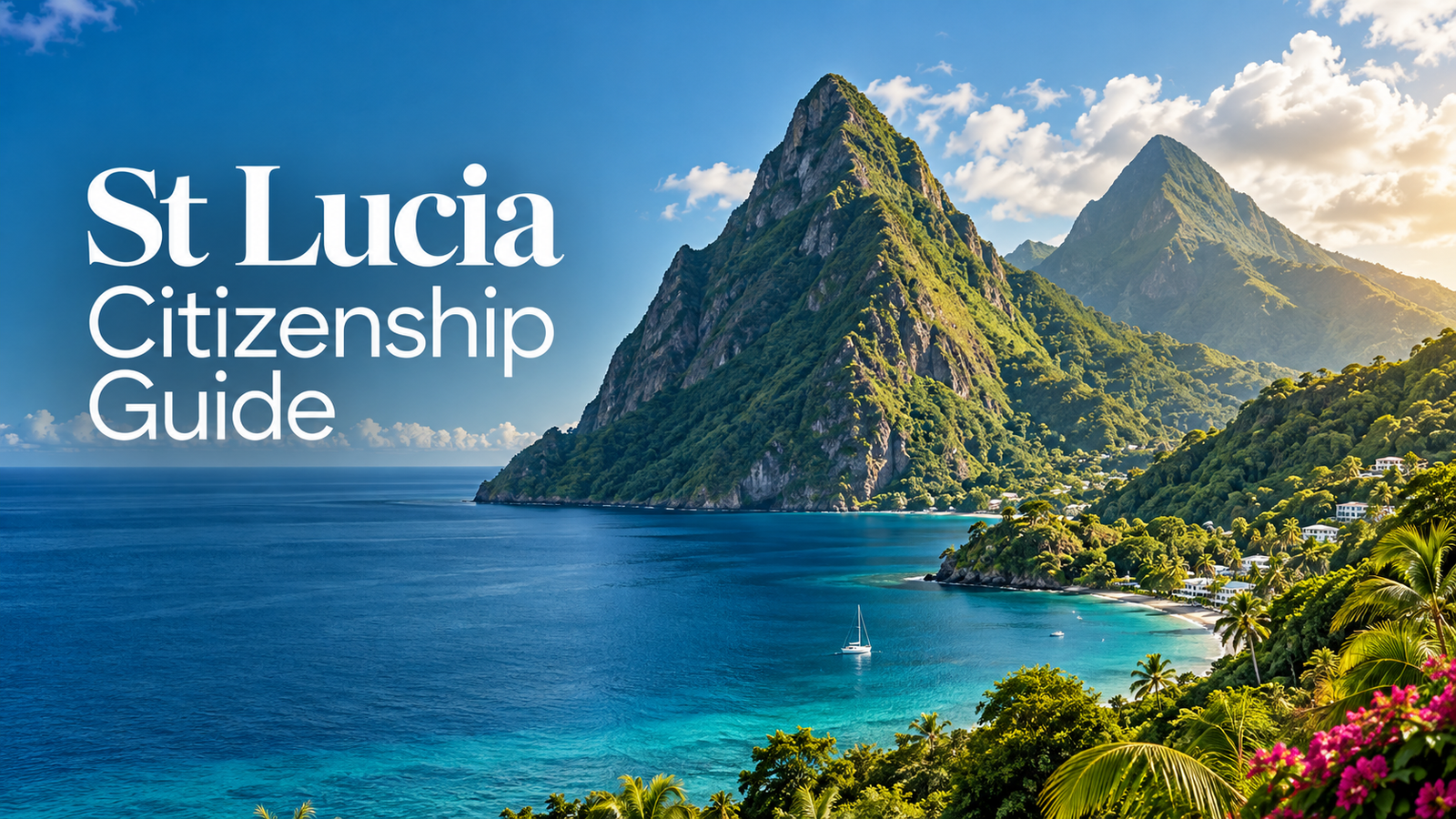
Featured image: AI-generated illustration of Saint Lucia’s landscape; it does not depict an approved investment project.