












By GulfInside | October 23, 2026
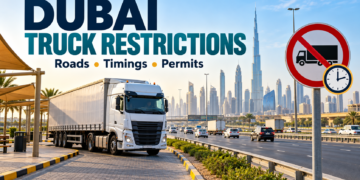
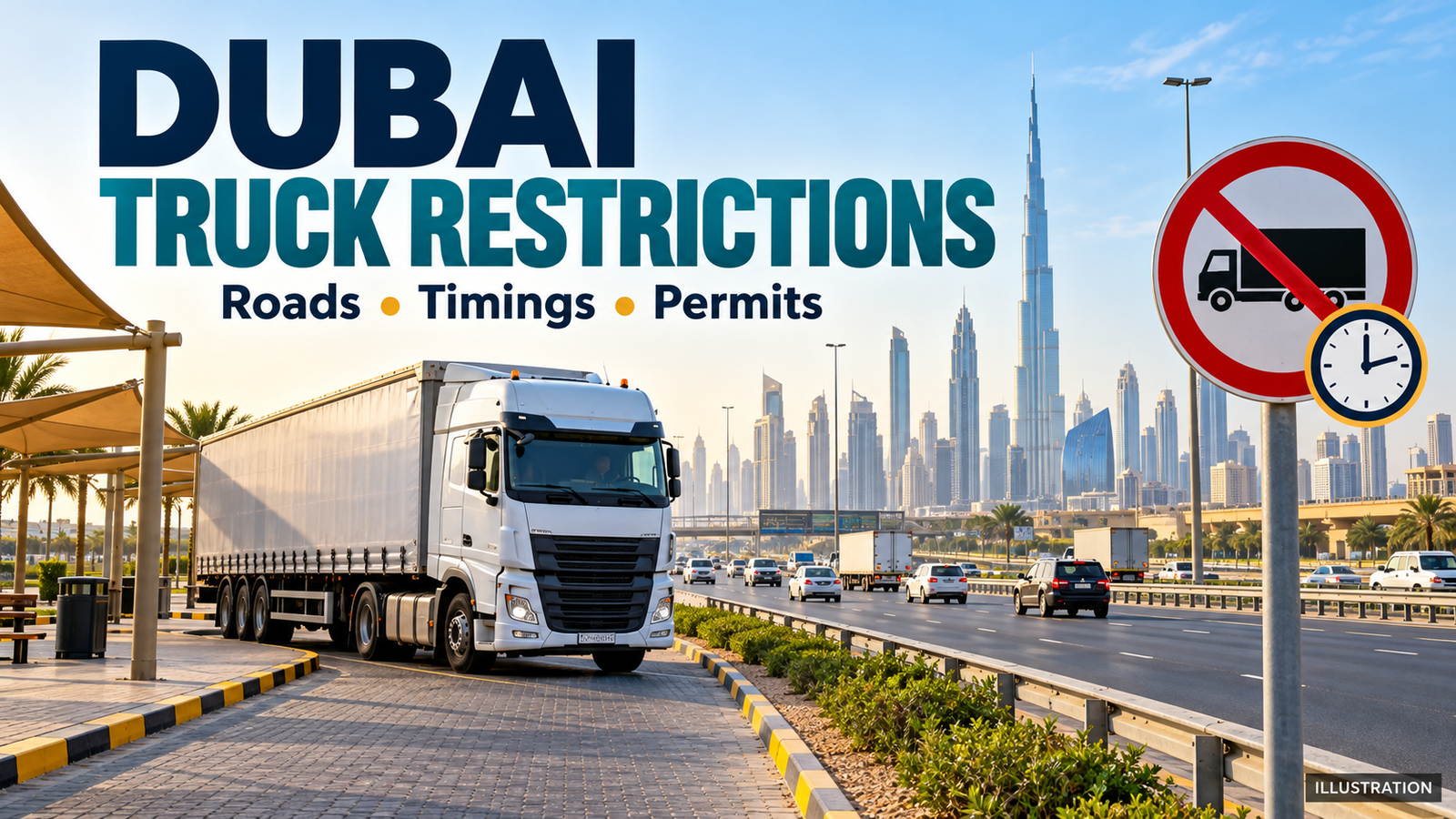
For a truck driver approaching Dubai at the wrong time, choosing the wrong road can mean more than a delay. New movement restrictions effective October 1, 2026 require heavy-vehicle operators to check both their route and the clock before setting out. Dubai’s Roads and Transport Authority (RTA) and Dubai Police say the measures are intended to improve traffic flow and safety while preserving freight operations.
The restrictions are not a single citywide curfew. Some roads have round-the-clock prohibitions, some restrict trucks for 16 hours a day and others have three daily peak-hour windows. Emirates Road is exempt from the newly announced October decision, although operators should still check other applicable road-specific instructions and signage.
Dubai truck restriction timings: quick reference
| Road or area | Restricted hours |
|---|---|
| Al Qudra Street, Al Meydan Street, all crossings and Airport Tunnel | 24 hours a day |
| Sheikh Zayed Road, Beirut Street, Al Mizhar, Muhaisnah and Oud Al Muteena residential areas | 6am–10pm daily |
| Airport Street, Oman Street and Damascus Street | 6:30am–8:30am; 1pm–3pm; 5:30pm–8pm |
| Emirates Road | Exempt from the October 1 decision; check existing road-specific rules |
The table summarises examples identified in the official announcement, not an exhaustive route map. Roadside signs and subsequent RTA instructions take precedence when planning a journey.
Which roads have a 24-hour truck ban?
RTA identifies Al Qudra Street, Al Meydan Street, all crossings and Airport Tunnel among locations with round-the-clock restrictions. A driver cannot assume that travelling at night makes these corridors available. Companies should build alternative routes into dispatch software rather than wait until a vehicle reaches a prohibited approach.
When can trucks use Sheikh Zayed Road?
According to the announcement, Sheikh Zayed Road and Beirut Street are subject to restrictions between 6am and 10pm. The same 16-hour period applies to specified residential districts, including Al Mizhar, Muhaisnah and Oud Al Muteena. The remaining overnight window does not override any other applicable restrictions, vehicle conditions or signs.
Three peak-hour windows on urban roads
Airport Street, Oman Street and Damascus Street are among roads where restrictions apply from 6:30am to 8:30am, 1pm to 3pm and 5:30pm to 8pm. These windows can affect morning deliveries, midday fleet repositioning and evening return journeys. Businesses with tight receiving schedules may need to adjust loading appointments and handover times.
Is Emirates Road exempt?
Yes, RTA explicitly exempted Emirates Road from the October 1 decision. However, a previous RTA announcement had described restrictions on a section of Emirates Road toward Sharjah during evening peak hours. The October exemption should therefore not be interpreted as permission to disregard all existing signs or earlier corridor-specific controls. Drivers should verify the applicable section and latest operational notices with RTA.
Can a company obtain permission to drive during banned hours?
RTA says businesses needing truck movement during restricted hours in essential cases can apply for a Mobility Permit for Heavy Vehicles in Banned Times and Roads through its Right-of-Way Department on the RTA website. A commercial need does not automatically grant an exemption. Operators should secure approval before dispatching a vehicle on a restricted route.
What drivers and fleet managers should do now
- Identify every restricted corridor along the full journey, not just the delivery destination.
- Compare departure, arrival and return times against each road’s restriction window.
- Use permitted alternatives and designated truck rest stops when waiting is necessary.
- Do not park on main roads, residential streets or undesignated areas while waiting for restrictions to end.
- Apply for the relevant RTA mobility permit if an essential movement genuinely requires an exception.
- Recheck signage and RTA guidance before travel, particularly if a journey crosses several restricted corridors.
Why Dubai introduced the measures
RTA and Dubai Police say separating heavy-vehicle movements from busy traffic periods can ease congestion and improve road safety. The authority has completed 14 of 16 truck rest stops across six sites and added 364 spaces at seven facilities, bringing capacity at those facilities to 1,007 spaces. RTA says more than 150,000 trucks use rest stops each month, while approximately 400,000 truck journeys take place across Dubai daily.
Frequently asked questions
When did Dubai’s 2026 truck restrictions begin?
The newly announced restrictions took effect on October 1, 2026.
Are all trucks banned across Dubai during rush hour?
No. Restrictions vary by corridor, time of day and location; the announcement does not establish a uniform ban on every road.
Are there exceptions for urgent freight?
RTA provides an application route for essential cases, but approval is required. Operators should not assume an exception without a permit.
Where should drivers wait?
RTA encourages use of designated truck rest stops rather than stopping on main roads or in undesignated spaces.
Official sources
Dubai Media Office: RTA and Dubai Police announcement, September 26, 2026; RTA background on existing Emirates Road restrictions.