


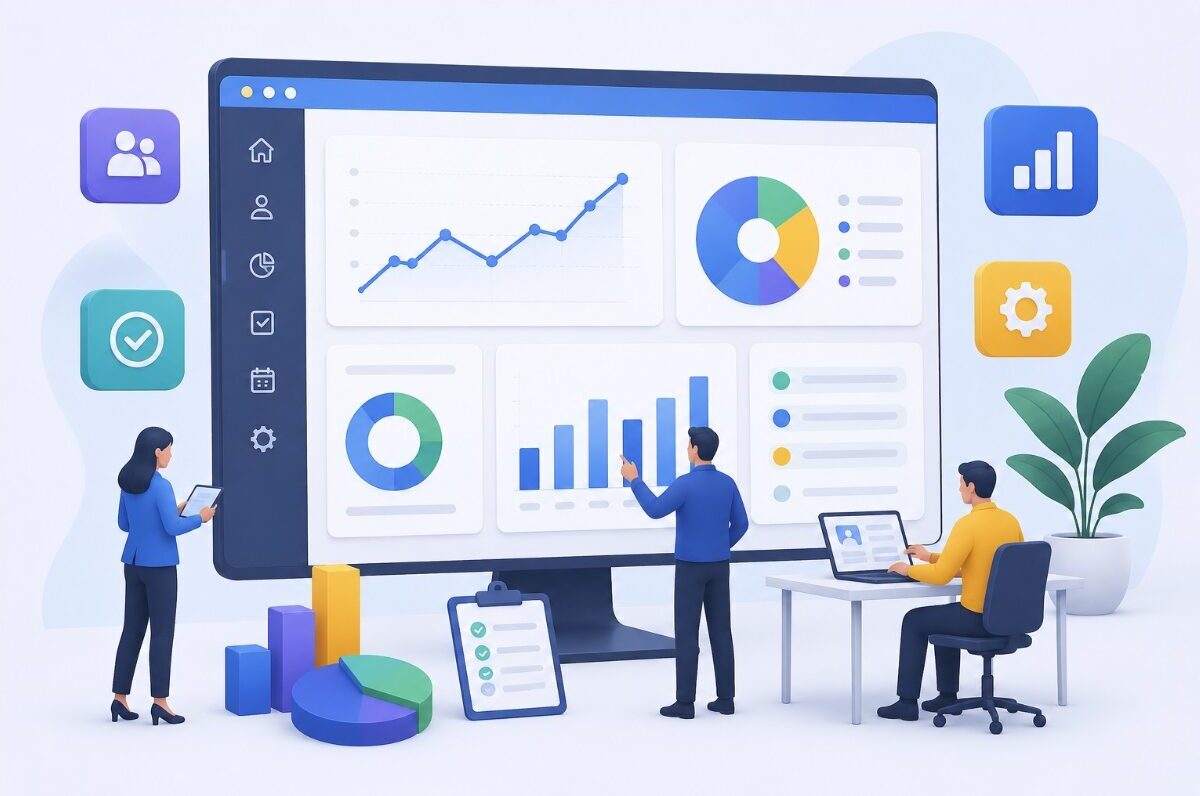
Business management software is a platform that connects the core functions of a company- finance, sales, and operations, into one system so every department works from the same data. Instead of maintaining separate spreadsheets, accounting files, and sales records that require manual reconciliation, the software ties transactions together automatically. When a sale is confirmed, inventory is updated. When goods are received, the accounts payable record is created. The numbers stay consistent without someone manually copying them between systems.
How It Tightens Financial Management
Finance teams spend a large portion of their time collecting numbers from different parts of the business before they can do any real analysis. Business management software removes that collection step.
Invoices, payments, expenses, and bank transactions are recorded in the same place where purchase orders and sales orders live. That means your profit and loss account reflects what is actually happening in the business, not what happened two weeks ago after someone finished a manual update.
For businesses running ERP software solutions in Dubai, financial reporting also needs to account for value added tax (VAT) requirements under the UAE Federal Tax Authority. When transactions are recorded correctly in the system, VAT-eligible amounts are tagged automatically, so the data needed for a return is already organized rather than assembled under deadline pressure.
Cash flow visibility is another clear benefit. The system shows outstanding receivables, upcoming payables, and current stock value together, so management can see the full picture before making spending decisions.
What It Does for Sales Tracking and Order Management
Sales teams often lose time between getting an order and fulfilling it because the information moves through too many hands. A customer places an order, someone enters it into a system, someone else checks stock, and a third person raises the invoice. Each handoff is a point where errors or delays can appear.
Business management software brings these steps together. The moment a sales order is confirmed, the system checks inventory availability and updates stock levels. The invoice is generated from the same order data, so prices and quantities are not re-entered and cannot drift from what was agreed.
Sales reporting becomes more useful too. Instead of pulling data from an e-commerce platform, a CRM, and accounting separately, managers can see revenue by product, by region, or by sales rep directly from one dashboard. That makes it easier to spot which products move and which do not, without waiting for a monthly report.
Operations and Inventory Control
Operational efficiency usually depends on knowing where things are. Whether that is stock in a warehouse, a purchase order in transit, or a job awaiting completion, the ability to see status without calling around saves time and reduces errors.
Business management software tracks inventory movements in real time. When goods come in against a purchase order, stock quantities update. When goods go out against a sales order, the same thing happens. If minimum stock levels are set, the system can flag when reordering is needed before a shortage actually occurs.
For companies with multiple locations or warehouses, which is common among mid-sized businesses looking at ERP software solutions in Dubai, the software can track stock across sites so transfers are visible and accounted for.
Production businesses get an additional layer of visibility. Raw material consumption, work-in-progress status, and finished goods quantities can all be tracked, giving management accurate costing data rather than estimates.
Why Having One Connected System Matters
The value of business management software is not in any single feature. It is in the fact that all the parts talk to each other. When sales data feeds directly into inventory and inventory feeds into procurement and procurement feeds into accounts payable, the business runs on accurate, current information throughout the day.
Disconnected systems create reconciliation problems. A mismatch between what the sales team recorded and what the accounts team posted leads to errors in financial statements and in stock counts. Finding and fixing those errors takes time that could be spent on actual work.
A connected system also makes audits and reporting far simpler. Every transaction has a trail that links the original document, whether a purchase order, delivery note, or invoice, to the final accounting entry. That traceability is useful both internally and when external auditors or tax authorities need to review records.
Conclusion
The practical result of using business management software is that people spend less time on data entry and reconciliation, and more time on work that moves the business forward. Finance closes faster, sales orders are fulfilled with fewer errors, and operations have the stock visibility they need to meet demand.