












By GulfInside | Saudi Arabia / Travel Guide | Updated October 20, 2026. Saudi Arabia offers several visa pathways for international visitors, including tourist eVisas, family visits, business visits and travel connected to Umrah. The correct route depends on nationality, residency, the purpose of travel and current government rules. This guide explains the main categories and links directly to official Saudi services. Requirements can change, especially around the Hajj season.
Saudi visa types at a glance
Tourist eVisa
- Typical purpose
- Tourism, leisure, events, permitted family visits and Umrah outside Hajj restrictions
- Where to verify
- Official Saudi eVisa portal
Family visit
- Typical purpose
- Visiting eligible relatives of Saudi citizens or residents
- Where to verify
- Saudi visa services
Business visit
- Typical purpose
- Approved meetings and business visits; not permission to take local employment
- Where to verify
- Saudi visa services and sponsoring organisation
Umrah-related travel
- Typical purpose
- Religious pilgrimage under permitted visa and seasonal rules
- Where to verify
- Nusuk and official visa portal
Hajj
- Typical purpose
- Annual Hajj pilgrimage, requiring specific authorisation
- Where to verify
- Official Hajj and Nusuk services
Employment or residency
- Typical purpose
- Work or residence under separate sponsorship and immigration rules
- Where to verify
- Saudi employer and government immigration channels
Who can apply for the Saudi tourist eVisa?
The official tourist eVisa portal lists eligible nationalities and application conditions. As of this update it describes an online visa pathway for citizens of dozens of eligible countries, with a standard eVisa validity of one year, multiple entries and stays of up to 90 days. Eligibility should always be checked against the live portal because country lists and additional qualifying residency or visa routes may change.
The official terms state that applicants under the nationality-based eVisa route need a passport valid for at least six months from entry. Travellers not eligible through the portal should check the nearest Saudi embassy or other official Saudi visa channels rather than assume automatic eligibility. Official eVisa terms.
What does a Saudi tourist eVisa allow?
According to the official eVisa portal, eligible tourists may visit for tourism, leisure, events, permitted visits to relatives and Umrah outside the Hajj season. A tourist eVisa does not authorise paid employment, formal study or Hajj. The visa’s maximum stay is distinct from its one-year validity; a one-year visa does not mean an unrestricted one-year stay.
Family visit visa requirements
Saudi Arabia’s official visa services list separate family visit application routes for citizens, Gulf Cooperation Council nationals, residents and eligible diplomatic personnel. The required relationship, sponsor information and supporting documents depend on the applicant’s route. Use the official Saudi visa service to select the correct category. A family visit visa is for visiting, not taking a job or performing Hajj.
Business visit versus work visa
Business visitors may travel for approved meetings or commercial activities under the applicable permission, but a business visit visa should not be treated as authorisation to perform local employment. Employment and residency require their own government approvals and documentation. Employers and visitors should confirm the correct route with official Saudi visa authorities before travel.
Can visitors perform Umrah on a tourist visa?
The official Saudi tourist eVisa website states that permitted tourist visa holders may perform Umrah, excluding Hajj. Pilgrimage access can also be affected by seasonal controls, permits, dates and restrictions near the Hajj season. Check Nusuk and the Saudi Ministry of Hajj and Umrah for current arrangements. Do not assume an Umrah permit or tourist visa grants permission to perform Hajj.
How to apply for the Saudi eVisa
- Visit the official Saudi eVisa website and verify nationality eligibility.
- Review the visa’s purpose, validity, stay limits and passport requirements.
- Complete the application with accurate passport and personal information.
- Upload the requested identity photograph and any required documents. The portal provides official photo specifications.
- Pay the fee shown on the official portal; charges can vary with insurance and visa arrangements.
- Receive and verify the issued electronic visa before making non-refundable plans.
Common visa mistakes to avoid
- Using unofficial websites that imitate government portals or charge unexpected fees.
- Assuming all nationalities qualify for the same eVisa route.
- Confusing visa validity with permitted length of stay.
- Assuming a tourist or business visit visa permits employment or Hajj.
- Ignoring passport validity, travel insurance or changing pilgrimage-season restrictions.
Frequently asked questions
Is Saudi Arabia’s tourist eVisa multiple entry?
The official portal describes its standard tourist eVisa as one-year, multiple-entry, with stays up to 90 days, subject to the conditions on the issued visa.
Can Pakistani passport holders apply for a Saudi tourist eVisa?
Eligibility depends on the current Saudi rules and any qualifying alternative route; Pakistani nationality alone should not be assumed eligible under the nationality-based eVisa list. Check the official portal or Saudi embassy for your exact circumstances.
Can I work on a tourist visa?
No. The tourist eVisa does not authorise employment.
Does an Umrah visa permit Hajj?
No. Hajj requires separate authorisation and compliance with official Hajj rules.
What if the visa application is refused?
Review the official decision and applicable rules. Do not rely on agents promising guaranteed approval.
Official sources: Saudi eVisa portal; eVisa terms; Saudi visa services; Nusuk. This guide is general information; visa conditions and fees can change.
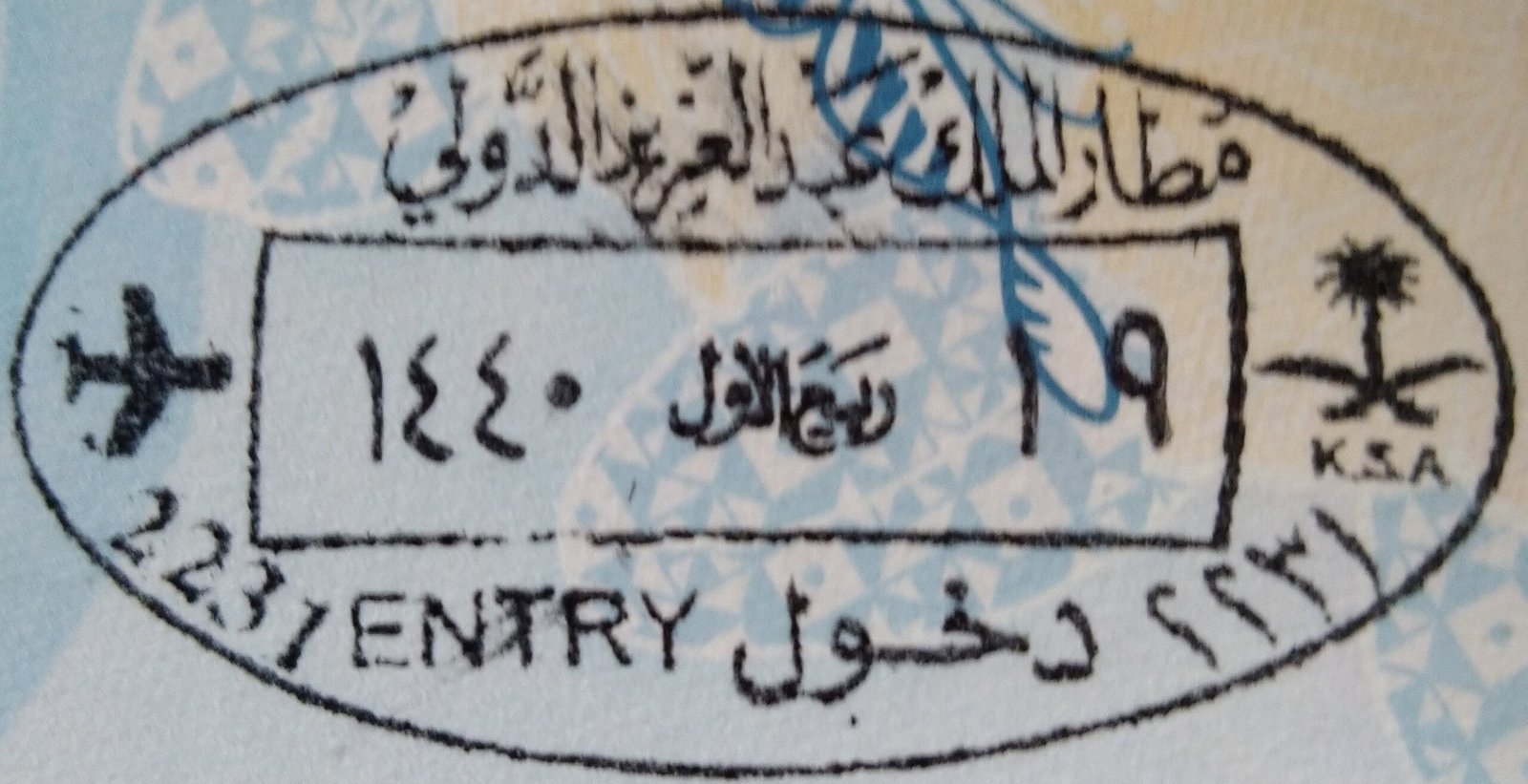
Photo note: The featured image is an archival photograph of an actual Saudi entry stamp in a passport, not a current 2026 visa document.